ورود سریع مشتری
ورود با موبایل و کد یکبار مصرف یا رمز ثابت


ورود با موبایل و کد یکبار مصرف یا رمز ثابت
از 2.490.000 ریال تا 34.990.000 ریال از 2.490.000 ریال تا 29.742.000 ریال
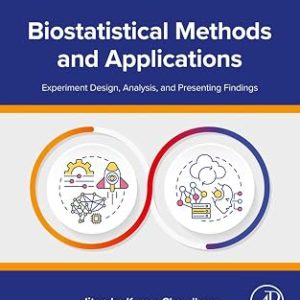
This book provides a clear, comprehensive guide to sample size determination across medical and health-related disciplines, including epidemiology, clinical trials, rehabilitation sciences, and reliability studies. Beginning with essential topics – such as estimating means and proportions or comparing two groups – it progresses to advanced applications including one- and two-way ANOVA, ANCOVA, repeated-measures ANOVA, multiple outcomes, correlation analysis, linear and logistic regression, intraclass correlation coefficients, Kappa statistics, Cronbach’s alpha, and more. Each topic is illustrated with real-world, fully worked numerical examples and supported by practical reference tables for commonly used values._x000d_
The ability to generalise findings from a sample to a reference population is one of the most compelling goals for researchers, yet achieving this requires an adequate sample size in practice. Determining the right sample size is also one of the most challenging steps in study design and proposal development, as it demands a careful balance between feasibility, resource
This book provides a clear, comprehensive guide to sample size determination across medical and health-related disciplines, including epidemiology, clinical trials, rehabilitation sciences, and reliability studies. Beginning with essential topics – such as estimating means and proportions or comparing two groups – it progresses to advanced applications including one- and two-way ANOVA, ANCOVA, repeated-measures ANOVA, multiple outcomes, correlation analysis, linear and logistic regression, intraclass correlation coefficients, Kappa statistics, Cronbach’s alpha, and more. Each topic is illustrated with real-world, fully worked numerical examples and supported by practical reference tables for commonly used values._x000d_
The ability to generalise findings from a sample to a reference population is one of the most compelling goals for researchers, yet achieving this requires an adequate sample size in practice. Determining the right sample size is also one of the most challenging steps in study design and proposal development, as it demands a careful balance between feasibility, resource constraints, and statistical rigor. Many novice or non-methodologist researchers fall into common pitfalls: relying on arbitrary, predetermined, or conventional sample sizes so they can collect data first and manipulate other factors later; modeling their studies on previous research without recognizing key differences―overlooking the fact that sample size is influenced by numerous dynamic factors; or adjusting software inputs and default values without fully understanding the underlying concepts and specialised terminology simply to obtain a preconceived sample size. These missteps can compromise both the validity and interpretability of results.
پیش از انتخاب نسخه دیجیتال، تفاوت فرمتها را در یک نگاه ببینید.
هنوز دیدگاهی برای این کتاب ثبت نشده است.
کتابهایی که برای این عنوان پیشنهاد شدهاند













جدیدترین کتابهای اضافهشده به فروشگاه

ورود با موبایل و کد یکبار مصرف یا رمز ثابت
کتاب موردنظرتان را انتخاب کنید تا اینجا نمایش داده شود.